Shoulder Injury Care After a Car Accident

Medically reviewed by: Christopher P. Dougherty, DO, FAOAO, FAAOS, CAQSM | Board Certified Orthopedic Surgeon | July, 2026

Shoulder pain after a car accident shouldn’t be ignored. Even a seemingly minor collision can place significant stress on the shoulder joint, muscles, tendons, ligaments, and surrounding soft tissues, resulting in injuries that may not become apparent for hours or even days.

According to the Cleveland Clinic, the shoulder is a complex joint that allows for a wide range of motion. Because it’s used so frequently in everyday activities, it’s also more susceptible to injury and damage that can lead to pain.

That complexity also means it’s not always obvious which part of the shoulder has been injured after an accident without a thorough evaluation. Prompt diagnosis can help identify the source of your pain and ensure you receive the right treatment before symptoms become more severe.

Man getting shoulder pain therapy

What causes shoulder injuries in car accidents?

Shoulder injuries are common after car accidents because the force of a collision can place significant stress on the shoulder joint and surrounding soft tissues.

Whether you’re involved in a rear-end collision, side-impact crash, or head-on accident, the sudden force can cause muscles, tendons, ligaments, and bones to stretch, tear, or become damaged.

Slip-and-fall accidents can also result in shoulder injuries, particularly when you instinctively reach out to catch yourself during a fall.

One of the most common injury mechanisms occurs when drivers brace themselves against the steering wheel just before impact. The force transmitted through the arm can injure the shoulder joint or rotator cuff.

Seatbelts and airbags help protect against more serious injuries, but the restraint forces themselves may still contribute to bruising, sprains, or strains around the shoulder. Passengers can also experience shoulder injuries as their bodies are thrown against the seatbelt or vehicle door during a collision.

If you’re experiencing hand, wrist and shoulder pain after an accident, multiple injuries may have occurred during the same incident. A comprehensive evaluation can help identify all injuries and guide the most appropriate treatment plan.

What are the symptoms of a shoulder injury after an accident?

Shoulder injuries can affect every movement of your arm, making everyday activities like reaching overhead, lifting objects, getting dressed, or even sleeping uncomfortable.

While some symptoms appear immediately after an accident, others may develop gradually as swelling and inflammation increase.

Common symptoms of a shoulder injury include:

  • Shoulder pain that worsens with movement
  • Limited range of motion
  • Weakness when lifting or rotating the arm
  • Swelling or bruising around the shoulder
  • Tenderness to the touch
  • Clicking, popping, or grinding sensations
  • Pain that radiates into the upper arm or neck
  • Difficulty sleeping due to shoulder discomfort

The symptoms you experience often depend on the specific type of shoulder injury you’ve sustained.

Common shoulder injuries after a car accident

Shoulder injuries range from mild strains to more serious damage involving the muscles, tendons, ligaments, or bones.

At Complete Care, we evaluate the extent of your injury and develop a treatment plan based on your diagnosis, symptoms, and recovery goals.

Rotator cuff injuries

The rotator cuff is a group of muscles and tendons that stabilize the shoulder joint and allow you to lift and rotate your arm. During a car accident, these tissues can become strained or torn when the shoulder is forced beyond its normal range of motion.

Symptoms of a rotator cuff injury may include:

  • Pain when reaching overhead
  • Weakness when lifting your arm
  • Difficulty performing everyday tasks
  • Shoulder pain that becomes worse at night

Shoulder dislocations and AC joint injuries

A shoulder dislocation occurs when the upper arm bone is forced out of the shoulder socket.

An AC joint separation involves damage to the ligaments connecting the collarbone to the shoulder blade.

Both injuries can result from the force of a car accident or a slip-and-fall accident.

Symptoms may include:

  • Severe shoulder pain
  • A visible change in the shape of the shoulder
  • Swelling and bruising
  • Inability to move the arm normally
  • A feeling that the shoulder is unstable

Other shoulder injuries

Depending on the force of the accident, you may also experience:

  • Labral tears
  • Shoulder sprains and ligament injuries
  • Tendon inflammation (tendinitis)
  • Bursitis
  • Fractures of the clavicle, shoulder blade, or upper arm

Shoulder injuries can also occur alongside other upper-extremity injuries. If you’re experiencing pain in your hands or wrists in addition to your shoulder, your provider may also evaluate you for wrist and hand injuries to ensure all injuries are identified and treated.


How is a shoulder injury diagnosed?

Accurately diagnosing a shoulder injury is the first step toward effective treatment.

Because many shoulder injuries share similar symptoms, a thorough evaluation can help determine which structures have been affected and whether additional testing is needed.

Your provider will begin by discussing your accident, symptoms, medical history, and the onset of your pain. They will also perform a physical examination to evaluate your range of motion, strength, stability, and areas of tenderness.

If a more serious injury is suspected, advanced diagnostic imaging may be recommended to confirm your diagnosis.

Depending on your symptoms and examination findings, your provider may recommend:

  • X-rays to identify shoulder dislocations or fractures
  • MRI scans to evaluate muscles, tendons, ligaments, and cartilage

At Complete Care, our integrated approach allows providers to coordinate your evaluation and treatment, helping ensure your care plan is based on a clear and accurate diagnosis.

How is a shoulder injury treated?

Treatment depends on the type and severity of your injury, as well as your symptoms and recovery goals.

Many shoulder injuries can be treated without surgery, especially when care begins soon after an accident.

Your provider will develop a personalized treatment plan designed to reduce pain, restore mobility, improve shoulder function, and help you safely return to your daily activities.

Non-surgical shoulder injury treatment

Many patients improve shoulder pain with conservative treatment, which may include:

  • Activity modification to allow the shoulder to heal
  • Ice or heat therapy to reduce pain and inflammation
  • Anti-inflammatory medications, when appropriate
  • Targeted rehabilitation exercises
  • Injury Care & Rehabilitation to improve strength, flexibility, and range of motion
  • Image-guided injections, when clinically appropriate, to reduce inflammation and improve comfort

Throughout your recovery, your care team will monitor your progress and adjust your treatment plan as needed.

When surgery may be recommended

Some shoulder injuries require surgical evaluation, particularly if there is significant structural damage or symptoms do not improve with conservative care.

Examples may include:

  • Complete rotator cuff tears
  • Recurrent shoulder dislocations
  • Certain labral tears
  • Severe ligament injuries

If surgery is appropriate, Complete Care coordinates referrals and ongoing care so your treatment remains seamless before and after your procedure.

Our spine and orthopedics team works closely with your other providers to support every stage of recovery.

Why choose Complete Care for shoulder injury treatment?

Recovering from a shoulder injury often requires more than treating pain alone. It requires understanding how the injury occurred, identifying all affected structures, and developing a coordinated plan that supports long-term recovery.

Complete Care brings multiple specialties together under one integrated system, making it easier to receive the care you need after an auto accident or slip-and-fall accident.

Patients choose Complete Care because we offer:

  • Same-day appointments at many locations
  • Comprehensive injury evaluations
  • Advanced diagnostic imaging
  • Coordinated multidisciplinary care
  • Personalized treatment plans based on your diagnosis and recovery goals
  • Convenient locations throughout Florida

Whether you’ve experienced a mild shoulder strain or a more complex injury, our team is committed to helping you regain strength, improve mobility, and return to the activities that matter most.

Learn more about our comprehensive auto injury care and how our integrated approach supports patients from diagnosis through recovery.

Frequently asked questions

Yes. It’s common for shoulder pain to develop hours or even days after an accident as inflammation increases and adrenaline wears off.

Even if your symptoms seem mild at first, it’s important to have your shoulder evaluated if you develop pain, stiffness, or limited movement.

A rotator cuff tear may cause pain when lifting your arm, weakness, reduced range of motion, or discomfort that worsens at night.

While these symptoms can suggest a rotator cuff injury, imaging and a physical examination are often needed to confirm the diagnosis.

Yes. The force of a collision can push the upper arm bone out of the shoulder socket, resulting in a dislocation.

Shoulder dislocations often cause severe pain, swelling, limited range of motion, and a visible change in the shoulder’s shape. They require prompt medical evaluation.

Not every shoulder injury requires advanced imaging, but it may be recommended depending on your symptoms and physical examination.

Diagnostic imaging helps identify rotator cuff and ligament injuries, as well as other conditions that may not be apparent on exam alone.

No. Complete Care does not treat broken bones.

If you suspect a fracture of the collarbone, shoulder blade or upper arm, go to the nearest emergency room.

If a fracture is identified during your evaluation at Complete Care, we will refer you to an appropriate specialist for treatment.

Many shoulder injuries can be treated without surgery through a combination of injury care, rehabilitation, activity modification, medications, and other conservative treatments. If your injury is more severe or doesn’t improve with nonsurgical care, your provider may recommend a surgical evaluation.

You should seek medical evaluation as soon as possible if you develop shoulder pain, weakness, swelling, limited range of motion, or difficulty using your arm after an auto accident or slip-and-fall accident. Early diagnosis and treatment can help prevent complications and support a smoother recovery.

Find a Clinic Near You

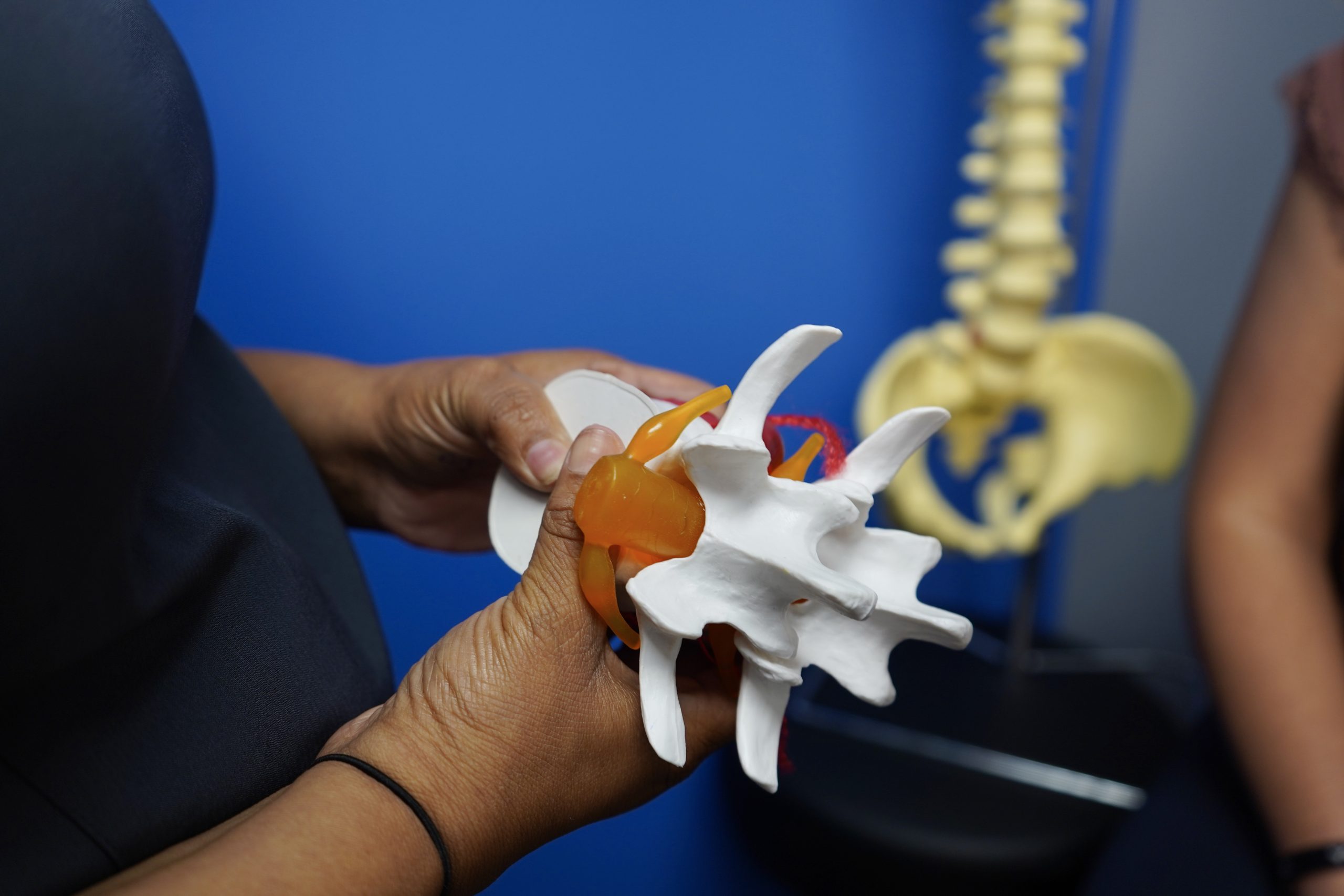
a chiropractor holding a model of a herniated disc
Get in Touch

Get the shoulder injury care you need sooner

You don’t have to live with shoulder pain after an accident. Getting the right diagnosis and treatment early can help you recover safely and return to your normal routine sooner.

Whether you’ve experienced a rotator cuff injury, shoulder dislocation, or another type of shoulder damage after an accident, Complete Care is here to help.

Our multidisciplinary team provides comprehensive evaluation, advanced diagnostics, and personalized treatment designed to help you recover safely and return to the activities you enjoy.