Ankle & foot injury care after a car accident

Medically reviewed by: Christopher P. Dougherty, DO, FAOAO, FAAOS, CAQSM | Board Certified Orthopedic Surgeon | July, 2026

Your ankles and feet provide the foundation for every step you take. They support your body weight, help maintain balance, and allow you to walk, stand, climb stairs, and move through your daily routine with confidence.

A car accident can place significant force on these complex structures, leading to injuries involving the bones, joints, ligaments, tendons, or soft tissues. While some injuries cause immediate pain, others become more noticeable as swelling and inflammation develop in the hours or days after a collision.

According to MedlinePlus, the ankle and foot contain dozens of bones, joints, muscles, ligaments, and tendons that work together to provide stability and movement. Because these structures absorb so much force during everyday activities, even a seemingly minor injury can make walking and bearing weight uncomfortable.

If you’re experiencing ankle or foot pain after a car accident, early evaluation can help identify the cause of your symptoms and ensure you receive the treatment that’s right for your injury.

What causes ankle and foot injuries in car accidents?

Ankle and foot injuries are common after car accidents because they often absorb much of the force generated during a collision.

Whether your foot is pressing the brake pedal, resting on the floorboard, or struck during impact, the sudden forces involved can injure the bones, joints, ligaments, tendons, and muscles that support your lower leg and foot.

Common causes of ankle and foot injuries include:

  • Force against the brake pedal during a collision
  • Footwell intrusion during impact
  • Twisting of the ankle or foot
  • Direct impact against the vehicle interior
  • Heavy objects falling onto the foot
  • Slip-and-fall accidents

Some injuries cause immediate pain, while others become more noticeable over the next several hours as swelling develops.

If you’ve been in an accident and your ankle or foot doesn’t feel quite right, an early evaluation can help identify the injury before symptoms worsen.

If you were injured in a Florida auto accident, receiving an initial medical evaluation within 14 days may also help preserve your eligibility for Personal Injury Protection (PIP) benefits.

What are the symptoms of an ankle or foot injury after an accident?

Ankle and foot injuries can affect your ability to stand, walk, and maintain your balance.

Depending on the type and severity of the injury, symptoms may appear immediately after an accident or develop gradually as swelling and inflammation increase.

Common symptoms include:

  • Ankle or foot pain
  • Swelling
  • Bruising
  • Tenderness
  • Stiffness
  • Reduced range of motion
  • Difficulty standing or walking
  • Pain when bearing weight
  • Instability or the feeling that the ankle may “give out”
  • Numbness or tingling
  • Difficulty moving your toes or ankle

Because the ankles and feet work together with the rest of the lower body, changes in the way you walk can also place additional stress on the knees and hips, leading to pain in multiple joints after an accident.

Common ankle and foot injuries after a car accident

The type of injury you experience depends on how your ankle or foot was affected during the accident.

Ankle sprains

An ankle sprain occurs when the ligaments that support the ankle are stretched or torn. These injuries often happen when the foot twists suddenly during a collision or slip-and-fall accident.

Symptoms may include:

  • Pain around the ankle
  • Swelling
  • Bruising
  • Difficulty bearing weight
  • Joint instability

Achilles tendon injuries

The Achilles tendon connects the calf muscles to the heel and plays an important role in walking and pushing off the ground. A sudden force during an accident can strain or tear this tendon.

Symptoms may include:

  • Pain in the back of the ankle
  • Swelling
  • Weakness when pushing off the foot
  • Difficulty walking
  • A popping sensation at the time of injury

Tendon and ligament injuries

Not every ankle or foot injury involves a broken bone. Tendons and ligaments throughout the foot can also become strained or torn during the force of a collision.

Symptoms may include:

  • Pain with movement
  • Swelling
  • Tenderness
  • Reduced flexibility
  • Difficulty with balance or walking

How is an ankle or foot injury diagnosed?

An accurate diagnosis helps determine which structures have been affected and guides the most appropriate treatment plan.

Your provider will discuss how the accident occurred, review your symptoms and medical history, and perform a physical examination. They’ll evaluate your range of motion, strength, stability, gait, and areas of tenderness while assessing your ability to stand and bear weight.

If additional evaluation is needed, diagnostic imaging can help confirm your diagnosis and determine the severity of your injury.

Depending on your symptoms, your provider may recommend:

  • X-rays to identify joint abnormalities and fractures
  • MRI scans to evaluate ligaments, tendons, muscles, and other soft tissues

At Complete Care, our integrated team works together to accurately diagnose your injury and develop a personalized treatment plan based on your symptoms and recovery goals.

How are ankle and foot injuries treated?

Treatment depends on the type and severity of your ankle or foot injury, your symptoms, and how the injury is affecting your ability to stand, walk, and perform everyday activities.

The goal is to reduce pain, promote healing, restore stability, and help you return to normal movement as safely as possible.

Your personalized treatment plan may include:

  • Rest and activity modification
  • Ice and elevation to reduce swelling
  • Compression or bracing to support the injured area
  • Anti-inflammatory medications
  • Rehabilitation to improve strength, flexibility, balance, and range of motion
  • Chiropractic care to improve joint function and mobility when appropriate
  • Pain management procedures, such as injections, when conservative treatment isn’t enough

When surgery may be needed

While many ankle and foot injuries respond well to conservative treatment, some conditions require specialized orthopedic care.

Severe tendon ruptures, joint instability, or injuries that don’t improve with non-surgical treatment may require evaluation by our spine and orthopedics team.

At Complete Care, our providers work together to coordinate every aspect of your care. By bringing multiple specialties together under one roof, we can create a personalized treatment plan that supports your recovery from diagnosis through rehabilitation.


Why choose Complete Care for ankle & foot injury treatment?

After a car accident, getting the right care quickly can make all the difference.

Complete Care provides comprehensive auto injury care through an integrated team of providers who work together to diagnose your injury, coordinate your treatment, and support your recovery.

When you choose Complete Care, you’ll benefit from:

  • Same-day appointments available
  • Comprehensive evaluations with on-site diagnostic imaging when needed
  • Personalized treatment plans
  • Coordinated care across multiple specialties
  • 30+ convenient locations throughout Florida

Our integrated approach ensures every provider is working toward the same treatment plan, providing seamless, patient-centered care every step of the way.

Frequently asked questions

Recovery time depends on the type and severity of your injury.

Mild sprains may improve within a few weeks, while fractures, tendon injuries, and more complex conditions can take several months.

Your provider will develop a treatment plan based on your diagnosis and progress.

Yes. Some injuries don’t cause immediate symptoms. Pain, swelling, and stiffness may become more noticeable over the hours or days following an accident as inflammation develops.

Not always. Your provider will determine whether diagnostic imaging is necessary based on your symptoms and physical examination.

X-rays are commonly used to identify fractures, while an MRI may be recommended to evaluate soft tissue injuries or more complex conditions.

No. Complete Care does not treat broken bones. If you suspect an ankle or foot fracture, go to the nearest emergency room. If a fracture is identified during your evaluation at Complete Care, we will refer you to an appropriate specialist for treatment.

Florida law generally requires you to receive an initial medical evaluation within 14 days of an auto accident to remain eligible for Personal Injury Protection (PIP) benefits.

Seeking prompt care can help protect both your health and your potential insurance coverage.

Find a Clinic Near You

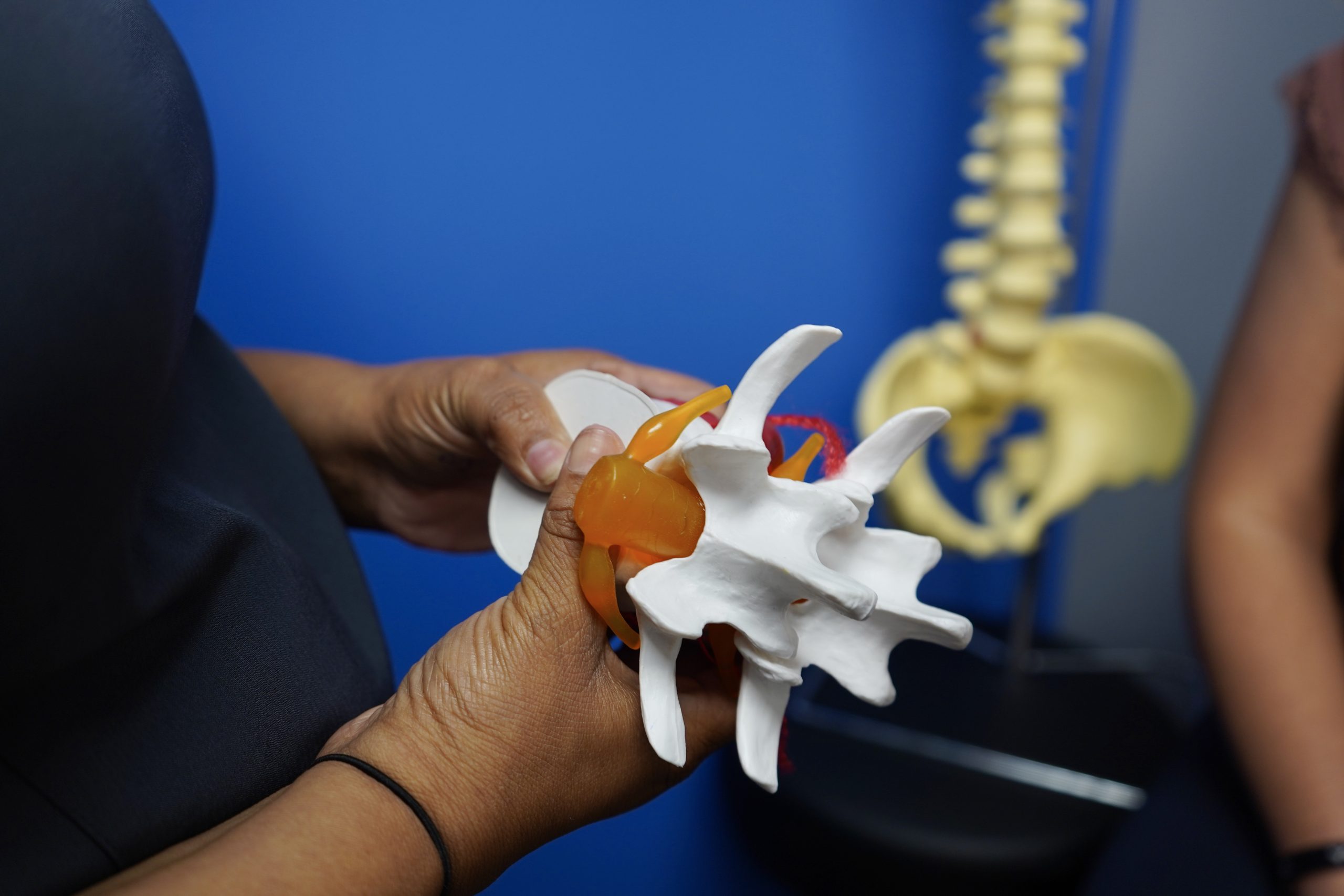
a chiropractor holding a model of a herniated disc
Get in Touch

Get back on your feet with Complete Care

Ankle and foot pain after a car accident can make every step more difficult, but you don’t have to navigate recovery alone.

With 30+ convenient locations throughout Florida, Complete Care makes it easy to access the coordinated care you need to move forward with confidence.