Chest and torso injuries from car accidents

Chest and torso injuries from car accidents, including rib and sternal fractures, costochondritis, seatbelt syndrome, thoracic outlet syndrome, and abdominal muscle trauma, are frequently caused by seatbelt loading, airbag deployment, and steering wheel impact rather than direct blunt trauma.

 Complete Care evaluates and treats car accident injuries at 30+ Central Florida locations, with same-day appointments and no referral needed.

What chest and torso injuries are common after a car accident?

The chest and torso absorb significant force during a collision — from the seatbelt tightening across the chest and abdomen, the airbag deploying at speed, the steering wheel on impact, or the lateral forces of a side collision.

These mechanisms produce a distinct set of injuries that are often underestimated at the scene because they don’t always cause immediate, severe pain.

Rib and chest injuries can also be difficult to detect on a standard X-ray alone, particularly when fractures are incomplete or soft tissue damage is the primary injury. MRI and advanced imaging may be needed for an accurate diagnosis.

Complete Care treats four primary chest and torso injury types:

Rib & sternal fractures

Rib and sternal fractures are among the most common chest injuries in moderate to high-impact collisions.

The sternum and ribs can fracture from direct impact with the steering wheel, airbag deployment, or seatbelt compression.

Symptoms include sharp pain with breathing, coughing, or movement —often initially dismissed as bruising or muscle soreness.

Costochondritis & seatbelt syndrome

Costochondritis and seatbelt syndrome describe inflammation and soft-tissue injury to the cartilage connecting the ribs to the sternum, caused by sudden compression of the seatbelt during a collision.

The result is localized chest wall pain that worsens with movement, deep breathing, and pressure — a pattern that can mimic cardiac symptoms and is frequently misattributed.

Thoracic outlet syndrome (TOS)

Thoracic outlet syndrome develops when the nerves or blood vessels between the collarbone and first rib are compressed following trauma.

In car accident patients, TOS commonly produces arm numbness, shoulder pain, weakness in the hand, and a sensation of heaviness or fatigue in the arm — symptoms that may not appear until days or weeks after the accident.

Abdominal & core muscle trauma

Abdominal and core muscle trauma results from the sudden, forceful contraction of the abdominal muscles during impact or from direct seatbelt pressure across the abdomen.

Muscle tears, strains, and contusions in the core can significantly affect movement, posture, and the ability to engage in rehabilitation — and are frequently overlooked when more obvious injuries are present.


Why do chest injuries from car accidents go undetected?

Chest and torso injuries are among the most commonly missed car accident injuries — and several factors contribute to that.

At the scene, the adrenaline response suppresses pain, and many patients feel only mild soreness or tightness, attributing it to the stress of the accident rather than a physical injury. Seatbelt bruising is often visible, but the deeper tissue damage beneath it is not.

Standard chest X-rays are effective for identifying complete rib fractures but can miss incomplete fractures, cartilage injuries, and soft tissue damage entirely.

Thoracic outlet syndrome, in particular, is notorious for delayed symptom onset — arm tingling, shoulder pain, and hand weakness may not develop until the inflammatory response builds over several days.

Delayed-onset chest pain, pain that worsens with deep breathing, unexplained arm numbness after a collision, and persistent chest wall tenderness all warrant imaging and evaluation — even if initial assessments appeared normal.

If you’ve been in an accident and are experiencing any of these symptoms, don’t wait for them to resolve on their own.

How does Complete Care treat chest and torso injuries?

Complete Care’s integrated care model is particularly well-suited to chest and torso injuries, which frequently co-occur with spinal and neck injuries and require coordinated treatment across multiple specialties.

Care begins with a full evaluation of the chest wall, torso, and any related spinal involvement.

When imaging is needed, diagnostic imaging and X-rays, including MRI for soft tissue assessment, are available on-site. Diagnostic imaging is performed only when medically necessary.

Treatment may include:

Because chest and spinal injuries often occur together in the same collision, Complete Care’s coordinated model allows both to be addressed concurrently — within the same system, by providers who communicate directly with each other.

When should I go to the ER for a chest injury after a car accident?

Chest injuries require careful triage. Some symptoms are medical emergencies.

Always call 911 or go to the nearest emergency room immediately if you experience:

  • Difficulty breathing or shortness of breath that doesn’t improve
  • Coughing up blood
  • Severe chest pain radiating to the jaw, left arm, or back
  • Suspected pneumothorax (collapsed lung) — sudden sharp chest pain and breathlessness
  • Signs of internal bleeding — dizziness, rapid heart rate, abdominal rigidity, or worsening pain

Come to Complete Care for:

  • Localized rib or sternum tenderness without respiratory distress
  • Chest wall stiffness or pain that worsens with movement or deep breath
  • Seatbelt bruising across the chest or abdomen
  • Delayed-onset chest tightness or pain that developed after the accident
  • Arm numbness, shoulder pain, or hand weakness following a collision
  • Follow-up evaluation after ER discharge

Same-day appointments are available. Call (407) 554-5178.

Frequently asked questions

Yes. Rib fractures can occur from seatbelt compression alone, even in collisions without direct chest impact.

The force exerted by the seatbelt across the chest during a sudden stop is significant enough to cause rib fractures, sternal injuries, and soft tissue damage to the chest wall in moderate to severe collisions.

If you have chest tenderness following an accident, even without a visible impact, imaging is the only way to rule out a fracture.

Seatbelt syndrome typically presents as chest wall pain, tenderness along the seatbelt line, and worsening with deep breathing, coughing, laughing, or movement.

There is often visible bruising in the pattern of the seatbelt across the chest and abdomen.

Symptoms may feel like generalized soreness initially and become more painful in the 24 to 48 hours following the accident as inflammation develops.

It depends on the specific injury.

Mild soft tissue injuries and costochondritis may resolve within a few weeks with appropriate care.

Rib fractures typically require six to eight weeks to heal, though pain with deep breathing and movement can persist beyond that without rehabilitation.

Thoracic outlet syndrome can produce symptoms for months if the underlying nerve or vascular compression is not treated.

Early evaluation and consistent care are the most important factors in recovery.

Does Complete Care treat chest injuries from workplace accidents?

Complete Care’s injury care focuses on auto accidents and slip-and-fall injuries.

If you sustained a chest injury in a car accident or a slip-and-fall incident, Complete Care can provide evaluation, imaging, and coordinated treatment at 30+ Central Florida locations.

For workplace injury claims, we recommend consulting with your employer or workers’ compensation provider for guidance on appropriate care pathways.

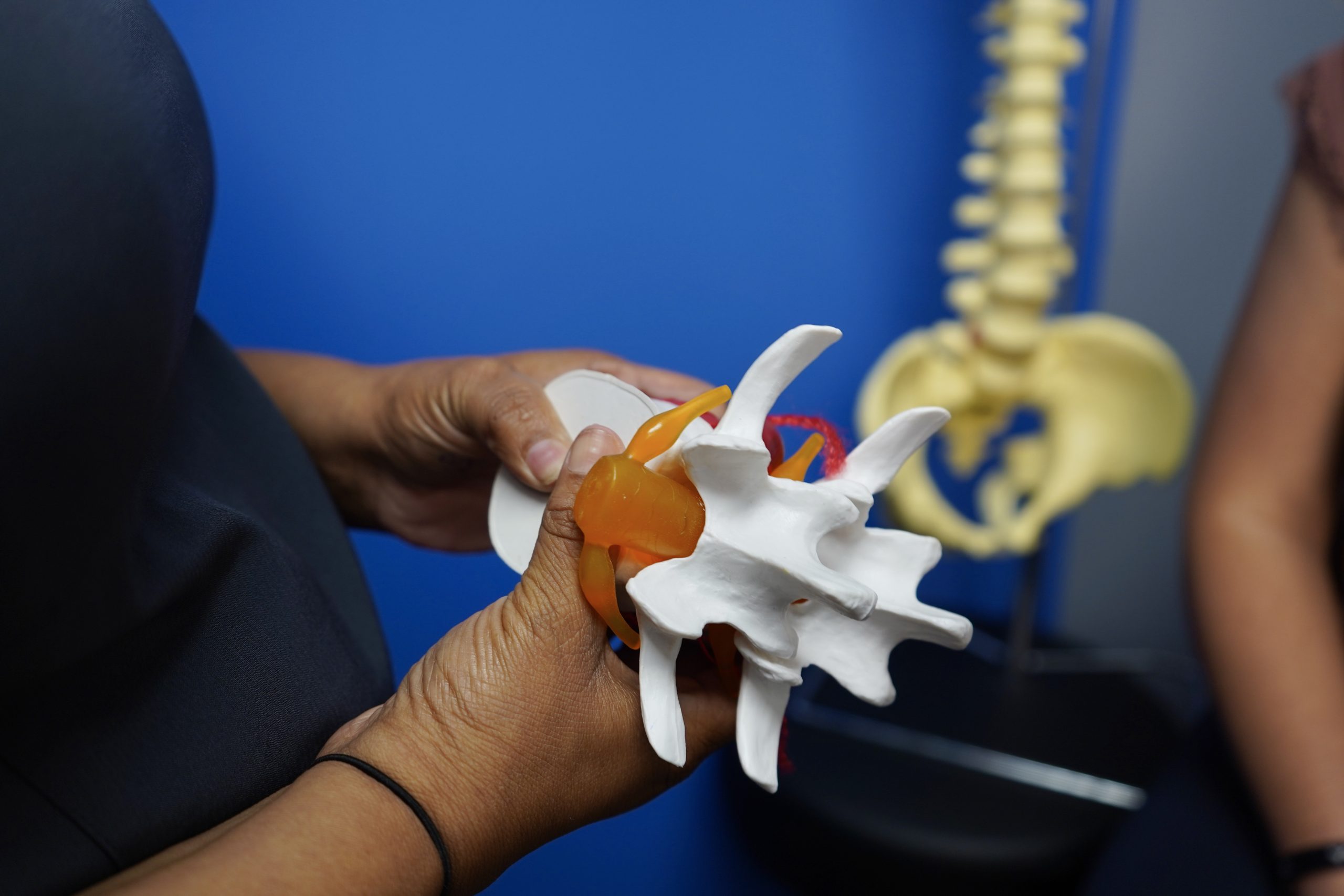
a chiropractor holding a model of a herniated disc
Get in Touch

Chest pain after a collision shouldn’t be ignored

Chest and torso injuries from car accidents are easy to underestimate — and easy to miss without the right imaging.

Complete Care offers same-day evaluation, on-site imaging, and coordinated injury care at 30+ Central Florida locations, with no referral needed.