
July 24, 2024
Last Updated: January 9, 2026
Medical Reviewer: Dylan Saulsbery, DC, DIBCN, DIBE, CBIS
Car accidents can be jarring and life-altering experiences that cause many injuries. In some cases, these injuries have symptoms you may not immediately link to the accident. One such symptom is ringing in the ears, also known as tinnitus. If you’ve been in an accident and start hearing ringing, buzzing or other bothersome sounds, you’re likely wondering what’s causing them and how to find relief. In this blog, we’ll explore the connection between car crash injuries and ringing in the ears, what the common causes are, and steps you can take to find relief.
Tinnitus is when you hear a sound that no one else can hear. People with tinnitus often hear a ringing in their ears, but they may also hear blowing, buzzing, clicking, hissing, humming, roaring, sizzling or whistling sounds. Tinnitus symptoms may:
Tinnitus affects people of all ages, including children, and sometimes goes away with time. You may have chronic tinnitus, though, if you’ve heard ringing in your ears or other sounds for three months or longer.
Health professionals do not know the exact cause of tinnitus, but the condition has been linked to a variety of things, including hearing loss, certain medical conditions and aging. Tinnitus can also develop after exposure to loud noises, head trauma and neck injuries, which can damage nerves, the ear itself or parts of the brain that manage sound.
Loud noises, head and neck injuries and other types of trauma are common in car accidents. Here’s how they can lead to tinnitus.
When a vehicle collides with another object, the impact can cause your head to move in a different direction from your neck and body. The rapid movement strains neck muscles, causing whiplash.
Although neck pain is the most common symptom, whiplash can also cause ringing in the ears. These injuries can damage bundles of nerve fibers that carry information to the brain. They can also damage the inner ear and arteries that carry blood through the neck, both of which can lead to hearing unusual sounds.
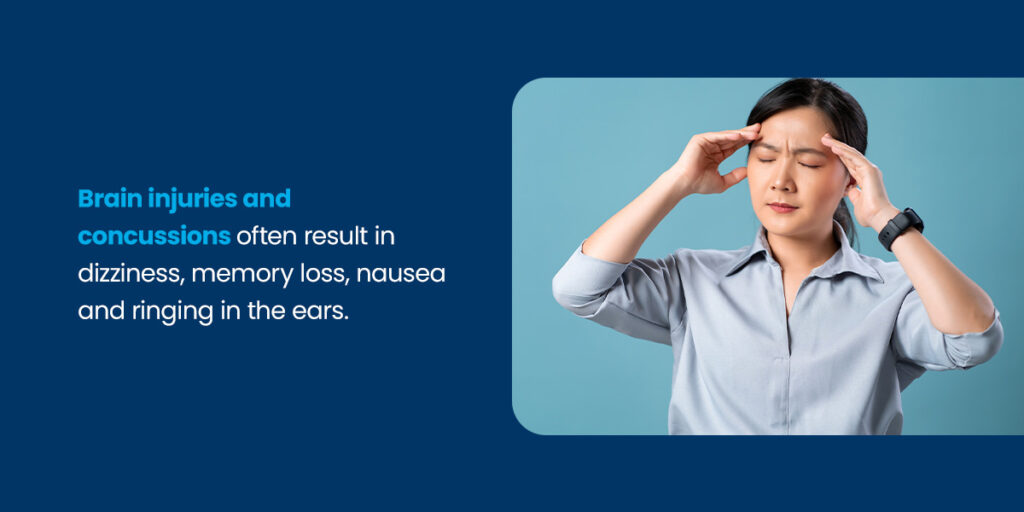
Concussions, a type of mild traumatic brain injury (TBI), are among the most common and severe car accident injuries. They can occur when your head comes in contact with another object or jerks back and forth, causing your brain to hit the inside of your skull.
Ringing ears are a common symptom of concussions. The injuries can damage the delicate cells in the inner ears that help translate sound vibrations into signals that travel to your brain, leading to ringing. The damage can also impair your hearing and your ability to process other sounds, like speech.
Many loud noises occur during a car accident, from the sounds of cars colliding to the airbag deployment. Just one exposure to a loud noise, even if it’s brief, can damage your hearing and cause ringing in the ears. You’re also close to the source of the noise during an accident, and your proximity to the sound is another factor in whether it affects your hearing.
Loud noises, like concussions, damage the delicate cells in your ear that convert vibrations into signals your brain can process. In addition, loud noises can rupture your eardrum, another possible cause of tinnitus.
Serious accidents that lead to facial or jaw fractures can break or dislocate the bones in your middle ear, which can lead to ringing and other sounds associated with tinnitus. Trauma related to head injuries other than concussions can also rupture your eardrum.
There’s no doubt that auto accidents are painful. Whiplash, back and spine injuries, and other types of trauma can lead to chronic pain, and researchers have found a link between tinnitus and chronic pain. It’s unclear why these conditions might occur together, but it’s possible that they share similar underlying causes. For example, psychological factors, such as anxiety, fear and stress, have been linked to both conditions, as have lifestyle factors, such as a lack of sleep.
Noise-related tinnitus may go away on its own with time, but it’s best to get help as soon as possible to prevent the ringing, buzzing or other bothersome sounds from seriously affecting your quality of life.
You may not be able to stop ringing in the ears after a car accident without treating the injury that caused it. A chiropractor or chiropractic neurologist can treat head trauma, whiplash injuries, concussions and soft-tissue damage. You may also benefit from mental health care for accident-related stress, depression or anxiety, especially if it’s contributing to tinnitus.
When it comes to at-home care, everyone is different, so you may need to try a few different things to help stop the ringing in your ears. You can start with these tips:
If you’re experiencing tinnitus after a car accident, it may be a sign of an injury that shouldn’t be ignored, such as:
At Complete Care, our team diagnoses and treats injuries and neurological issues that can occur during a car crash and help you manage tinnitus and other serious symptoms.
We offer walk-in and same-day appointments for many types of car accident injuries and related symptoms. Request an appointment at a Complete Care location near you.
The information provided on this website does not, and is not intended to, constitute legal advice; instead, all information, content, and materials available on this site are for general informational purposes only. Information on this website may not constitute the most up-to-date legal or other information. This website contains links to other third-party websites. Such links are only for the convenience of the reader, user or browser.