
Medically reviewed by Lisa Margavage, DC, November 2026
Many people find that a chiropractic adjustment is more comfortable than they expected.
A chiropractic adjustment usually feels like firm pressure, a quick stretch, or a brief sense of release. You may hear a pop as the joint moves. Mild soreness, stiffness, or tiredness can follow for a day or two, but report sharp pain to your provider right away.
If you’ve never been to a chiropractor, or you’re sore after an auto accident, it’s understandable to feel nervous about your first visit. Here’s what an adjustment may feel like, what to expect afterward, and when to seek medical attention.
A chiropractic adjustment, also called spinal manipulation, is a treatment in which a licensed chiropractor uses their hands or an instrument to apply a quick, controlled force to a joint.
The goal is to improve joint mobility, ease pain, and help you return to daily activities.
Depending on your evaluation, chiropractic care may be part of treatment for:
At Complete Care, adjustments are one part of a personalized treatment plan for injuries from auto accidents and slip-and-fall incidents. Learn more about our chiropractic care.
Not usually. An adjustment may feel like pressure followed by a sense of release. Some patients notice that the area feels looser or easier to move afterward, although responses vary.
You may feel mild discomfort if your muscles are tight or the area is tender from a recent injury. Tell your chiropractor if something hurts. Your provider can stop, change your position, or recommend a different technique.
According to the National Center for Complementary and Integrative Health, temporary side effects can include discomfort, stiffness, or a headache.
Serious complications, including spinal or neurological problems, are rare.
Your provider should discuss potential benefits and risks with you before treatment. Adjustments may not be appropriate for people with certain conditions, such as severe osteoporosis, cancer in the spine, or an increased risk of stroke.
After a crash, injured muscles and other soft tissues may be tender, swollen, or tense. That can make movement and pressure feel uncomfortable.
Your chiropractor will evaluate your injuries before recommending treatment. They may modify or postpone an adjustment if it is not appropriate for your condition. You do not need to push through pain to benefit from care.
Your visit generally follows a clear process:
At Complete Care, you can pair adjustments with active recovery. Exercises and movement help you rebuild the strength and function you need for daily life.
Yes. A popping sound can occur as pressure changes within the joint fluid and a gas-filled cavity forms. The sound does not mean your bones are cracking.
It’s also fine if you don’t hear anything.
A clinical commentary on spinal manipulation and joint cavitation in the Journal of Contemporary Chiropractic explains why the sound should not be used to judge whether treatment worked. Your symptoms, movement, and function are more useful measures of progress.
Some patients notice less discomfort or easier movement soon after an adjustment. Others experience temporary soreness or do not notice an immediate change. Your response depends on your condition and the treatment provided.
Yes. Mild soreness or stiffness can occur after an adjustment and often settles within a day or two.
Follow your provider’s aftercare instructions, which may include:
Contact your provider if soreness is worsening, is more than mild, or is not improving. Soreness alone does not tell you whether treatment is working.
Some people report temporary tiredness after chiropractic treatment. The reason can vary, and fatigue alone does not indicate that your body is healing or that an adjustment worked.
If tiredness persists, interferes with daily activities, or occurs with other new symptoms, tell your provider. They can help determine whether it needs further evaluation.
Contact your provider promptly if you notice:
Call 911 or seek emergency care for sudden weakness, trouble speaking, sudden vision changes, a sudden severe headache, or new loss of bladder or bowel control. Do not wait for a routine chiropractic appointment.
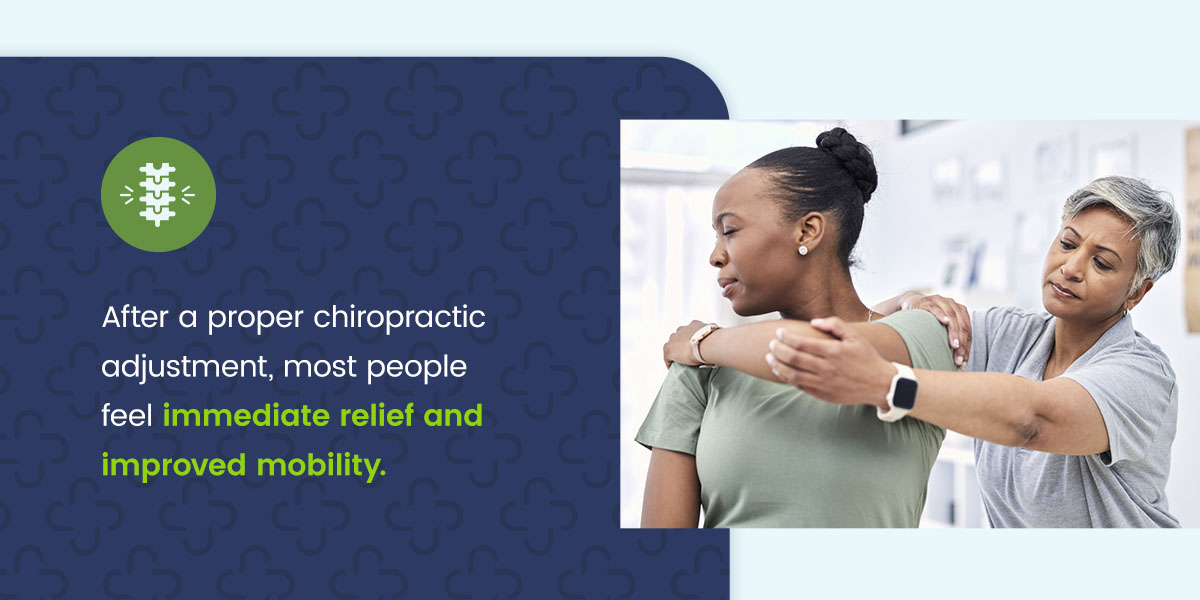
Some patients feel better after one visit, while others need ongoing care. Recovery after an auto accident depends on the injury, your health, and how you respond to treatment. Your provider will track your progress and adjust your plan as needed.
Treatment goals may include:
A study of older adults with spinal conditions in the Journal of Manipulative and Physiological Therapeutics found that reduced access to chiropractic care was associated with increased use of certain medical services, including spinal surgery. However, it did not establish that adjustments prevent surgery or predict outcomes after an auto accident.
If your recovery stalls, your provider can help determine the next steps, such as diagnostic imaging or interventional pain management.
Not every treatment involves a quick adjustment. Depending on your injury and comfort level, your chiropractor may recommend:
Your plan may also include physiotherapy or active therapy and rehabilitation to support your recovery.
Not typically. Your first adjustment may feel unfamiliar, and an injured area may be tender. Tell your chiropractor how you feel so they can adjust their approach. You should not feel pressured to continue a treatment that causes pain.
Mild soreness often improves within a day or two. If it lasts longer, gets worse, or comes with new symptoms, contact your provider.
Chiropractic care may be appropriate after an accident, but an evaluation should come first. Your provider will review your symptoms and health history to determine whether an adjustment is suitable and discuss its risks and benefits.
If you have a confirmed or suspected broken bone, seek imaging and treatment at a facility equipped to provide fracture care. Complete Care does not treat broken bones.
It can. Florida personal injury protection (PIP) insurance may help pay for eligible, medically necessary chiropractic care, subject to your policy and available benefits.
To qualify for PIP medical benefits, you must receive initial medical services and care within 14 days of the accident. Learn more about PIP coverage at Complete Care.
It depends on your injury and how you respond to care. Your provider will recommend a personalized plan and update it based on your symptoms, movement, and progress toward your recovery goals.
If you’re hurting after an auto accident or a slip-and-fall injury, we can help you understand your symptoms and take the next step. Complete Care offers same-day appointments and walk-ins at more than 30 locations across Florida, with support for insurance questions and paperwork.
Call 844-699-2273 to schedule an evaluation or find a location near you.
This article is for general information and is not medical advice. If you have signs of a serious head injury, call 911 or go to the nearest emergency department.
Complete Care is a fully integrated healthcare system focused on treating injuries resulting from auto accidents and slip-and-fall incidents. Through a coordinated network of providers and services, Complete Care helps patients recover from injury through personalized treatment plans, active rehabilitation, and convenient access to care.
The information provided on this website does not, and is not intended to, constitute legal advice; instead, all information, content, and materials available on this site are for general informational purposes only. Information on this website may not constitute the most up-to-date legal or other information. This website contains links to other third-party websites. Such links are only for the convenience of the reader, user or browser.